Tango no Sekku Fun Facts
Tango no Sekku (the Dragon Boat Festival) is a traditional event held every year on May 5th, known especially as a day to pray for the healthy growth of boys.
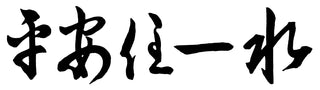
Originally, it meant the day of the Horse (午) at the beginning (端) of the lunar month, and was not limited to May 5th as it is today. It is also said that because the sounds of “Go” (五) and “Go” (午) are the same, it gradually changed to May 5th.
In this blog post, I have written a few stories related to Tango no Sekku.
1. The Origin of Koinobori
Speaking of Tango no Sekku, koinobori are also an iconic symbol. In Chinese legend, there is a saying that if a carp swims upstream in a river with a strong current and climbs the Ryumon Waterfall, it will become a dragon. Because of this, carp are considered a symbol of overcoming difficulties, growing, and achieving success, and in Japan, koinobori came to be displayed in the hope that boys will grow up strong and fine.
2. Iris and Warriors
There is also an origin for the iris (shobu) used on Tango no Sekku. Because iris leaves are pointed and shaped like swords, they were used as “talismans against evil” in ancient Japan. Also, the word “shobu” (菖蒲) sounds the same as “shobu” (勝負, contest) and “shobu” (尚武, valuing martial arts and bravery), and it is said that warriors kept iris close to them on Tango no Sekku to pray for luck in contests and strength in battle. This was linked to the growth and health of boys.
3. Kashiwamochi and Chimaki
Kashiwamochi and chimaki eaten on Tango no Sekku each have their own meanings. Kashiwamochi is characterized by being wrapped in kashiwa leaves, and because the kashiwa tree does not shed its old leaves until new buds appear, it carries the meaning of a family line that never ends. On the other hand, chimaki was originally a Chinese custom, and it is said to have been introduced to Japan during the Nara period. In Japan, there is a custom of eating chimaki on Tango no Sekku as a food to pray for the health and safety of children and family, and its origin comes from the custom of eating chimaki on the Tango no Sekku of May 5th in ancient China being passed down as is.
4. “Armor and Helmet” and “Courage”
On Tango no Sekku, armor (yoroi) and helmets (kabuto) are displayed to pray for the healthy growth of boys. This is because armor and helmets played the role of protecting warriors, they came to be displayed as a symbol of protecting boys. Furthermore, armor and helmets not only have meaning as decorations, but are also a symbol of a strong heart that allows boys to face difficulties with courage. Therefore, when displaying armor and helmets, parents often put in the wish that “I want you to have a strong heart that will not give in to difficulties even when you grow up.”
Tango no Sekku is not only important for celebrating the healthy growth of your son, but is also valued as an event to be enjoyed by the whole family.