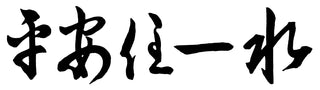
How do you observe the five seasonal festivals?
Japan has traditional events known as the five seasonal festivals. These are long-standing annual events and important opportunities to enjoy the changing seasons while wishing for the health and happiness of one's family. This article introduces the origins and meanings of each festival, as well as how they are observed today.
1. Jinjitsu (January 7)
Jinjitsu is known for the custom of eating seven-herb rice porridge. This event is meant to relieve the fatigue of the New Year and pray for good health. By eating rice porridge with the seven spring herbs (gibier, ground ivy, Japanese knotweed, Japanese knotweed, Japanese knotweed, Japanese knotweed, and Japanese knotweed), people pray for health in the new year.
Modern observance At home, it is common to make seven-herb rice porridge using a "seven-herb set" sold at supermarkets. It is also sometimes offered as a special menu item at Japanese restaurants.
2. Joushi (March 3)
Joushi is popularly known as Hinamatsuri, or Girls' Day. It was originally held to ward off evil spirits, but today it has become a day to wish for the healthy growth of girls.
Modern observance At home, people display Hina dolls and enjoy chirashi sushi, hina-arare, and sweet sake. In some regions, a floating doll ceremony may also be held. At kindergartens and nurseries, Hinamatsuri events are held, where children commonly sing songs and display paper Hina dolls.
3. Tango (May 5)
Tango is a day to wish for the healthy growth of boys, and there is a custom of displaying May dolls and carp streamers. Since ancient times, "shobu-yu" has been held, where iris leaves are placed in the bath, and it is believed to ward off evil spirits.
Modern observance At home, it is common to eat kashiwamochi and chimaki, and display May dolls and carp streamers. In some regions, the custom of displaying warrior dolls still remains. Also, in recent years, compact indoor carp streamers and modern-designed May dolls have become popular.
May Dolls and Tango At Tango, there is a custom of displaying armor, a symbol of warriors. This is meant to wish for boys to grow up strong and healthy. Armor and helmets symbolize bravery and health, and today, miniature-sized armor is displayed indoors as May dolls. Also, in some regions, warrior processions dressed in armor may be held.
4. Tanabata (July 7)
Tanabata is a festival derived from the legend of Orihime and Hikoboshi, and there is a custom of writing wishes on strips of paper and decorating them on bamboo leaves. It was originally an event to wish for improvement in sewing and calligraphy, but now it has become established as a romantic event for making wishes.
Modern observance At home and at school, it is common to decorate with bamboo and write wishes on strips of paper. In some regions, Tanabata festivals are held grandly, attracting many tourists.
5. Choyo (September 9)
Choyo is an event to wish for longevity using chrysanthemum flowers. In the past, there was also a custom of drinking "chrysanthemum wine" to ward off evil spirits, but it is not very common today. However, because it is also a season when chrysanthemum flowers are beautiful, the custom of decorating with flowers remains.
Modern observance It is common to decorate with chrysanthemum flowers or enjoy sweets sold at Japanese confectionery shops in honor of the "Chrysanthemum Festival." Also, in some regions, chrysanthemum exhibitions are held, where chrysanthemum dolls and other items may be displayed.
Incorporating Festivals into Modern Life
The five seasonal festivals are not just traditional events, but also important opportunities to feel the changing seasons. Even in a busy daily life, it is good to think of easy ways to incorporate them.
-
Enjoying food: Simply preparing traditional foods for each festival can allow you to casually experience the festival.
-
Enjoying decorations: By decorating your room with Hina dolls, May dolls, bamboo decorations, and other items, you can enjoy the season visually.
-
Learning about culture: By spending time learning the origins of the festivals with children, you can pass down Japanese traditional culture.
In modern times, traditional events may be simplified, but you can spend time joyfully with a little creativity. Why not try incorporating the five seasonal festivals into your daily life while cherishing them together with family and friends?